
Does Nordic Hamstring Volume Really Matter?
Finding the right balance between adaptation and practicality.
Hamstring injuries remain one of the biggest challenges in football.
Across professional leagues, they account for almost one in five time-loss injuries every season.
Despite years of research and widespread use of the Nordic Hamstring Exercise (NHE), there is still debate about how much volume is actually needed to make a difference.
A new 2025 meta-analysis by Jozef Cholp and Eva Zemková, provides one of the clearest answers to date.
Their study examined 11 trials involving nearly 300 football players to compare the effects of high-volume and low-volume NHE training on hamstring architecture and eccentric strength.
What the Study Found
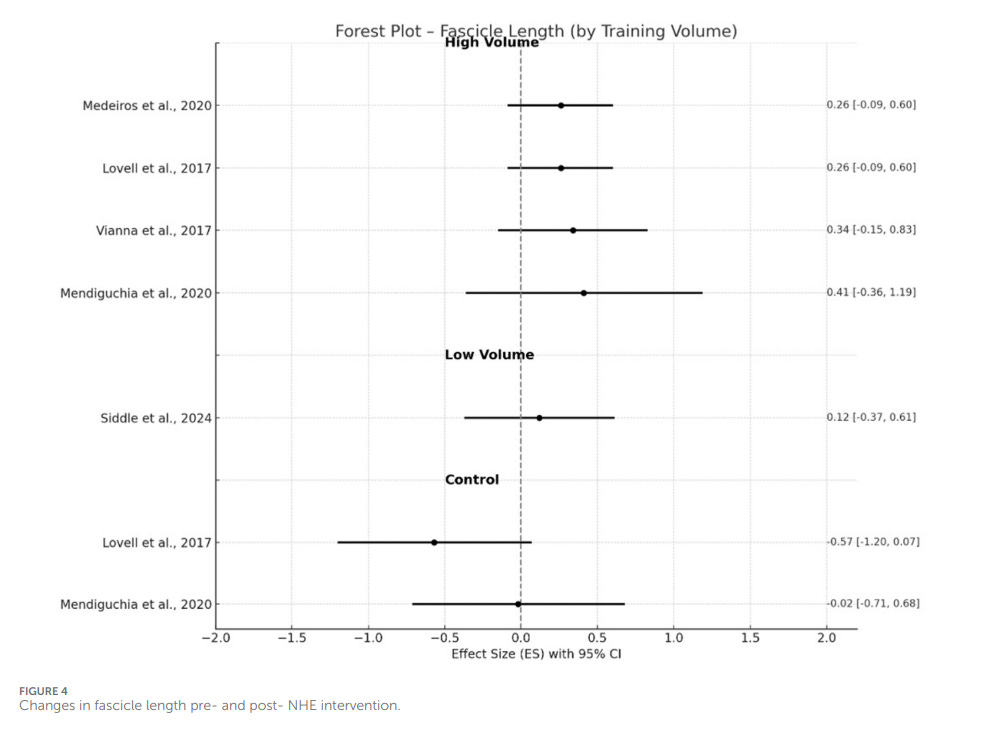
High-volume NHE, performed two to three sets of eight to twelve reps, two to three times per week, produced significant improvements in fascicle length, muscle thickness, and eccentric strength. These adaptations are known to enhance resilience and reduce injury risk.
Low-volume NHE, typically one to two sets of three to five reps, once or twice per week, improved strength only. It did not change muscle architecture, which suggests a limited structural effect when the training dose is small.
Interestingly, eccentric torque results varied depending on the testing method. Studies using NordBord and isokinetic assessments produced inconsistent outcomes, highlighting that measurement choice can affect interpretation.
The researchers also found that outcomes depended on training experience, compliance, and phase of the season. Players familiar with the exercise, and those who completed a full training block, achieved the greatest gains.
Why Volume Matters
The evidence supports the idea that high-volume NHE, roughly 400 to 700 total repetitions over six to ten weeks, is necessary to drive meaningful architectural adaptations.
Longer fascicles and thicker hamstring muscles are key factors in reducing injury risk during sprinting and high-speed actions.
However, volume comes at a cost. The higher the load, the greater the risk of delayed soreness and reduced readiness, particularly when players are already exposed to heavy match schedules. This is where context and timing are essential.
Practical Implications for Practitioners
During pre-season, when players have more recovery time, high-volume NHE blocks should be prioritised. This period is ideal for building structure, improving eccentric capacity, and preparing the hamstrings for repeated high-speed exposure.
In-season, when fixture congestion and travel limit recovery, lower volumes are more appropriate. Shorter sessions help maintain eccentric strength without creating excessive soreness or fatigue. In this phase, consistency and progression matter more than absolute volume.
For players new to Nordics, gradual exposure is critical. Starting too aggressively often leads to poor compliance and early drop-out. Building tolerance first allows a smoother transition to higher-volume phases later in the season.
Key Take Home Messages
High-volume Nordics are best for developing hamstring architecture and long-term injury resilience. Low-volume Nordics are useful for maintaining strength and managing load in-season. Whichever approach is used, progression, compliance, and timing are the real difference-makers.
That’s all for today.
See you next Friday.
James
🚀 Join the Waitlist for The Football Performance Network
If you’re serious about growing your career in football, join a global community of 70+ physical performance and sport science practitioners inside the Football Performance Network.

As a member, you'll get:
✅ Direct 1:1 mentorship and feedback
✅ Live events with elite-level experts
✅ Practical, research-informed learning you can use immediately
✅ A supportive network that understands your journey
⚽️ Our next cohort opens in January 2026 and limited to 25 spaces.
🔗 Join the waitlist today to be first in line when applications open.
👋 Say Hi!
Was this issue helpful?
I’d love to hear from you - just hit reply and tell me what resonated.
I read and respond to every email.