
How to use Reflective Practice

Welcome to the latest issue of The Football Scientist.
In this week's issue, I will be discussing how reflective practice relates to sports science practitioners and how can it be practically implemented to enhance your career.
I hope you enjoy!
What is Reflective Practice?
Reflective practice refers to the process of intentionally reflecting on one's actions, experiences, and decisions in order to gain insight, learn from them, and improve future performance.
It involves taking the time to thoughtfully analyze and evaluate one's own thoughts, behaviors, and experiences with the goal of deepening understanding and enhancing professional or personal development.
There are many models and literature in the field of reflective practice. In sport sciences, the work of Zoe Knowles is worth checking out (see link to research profile).
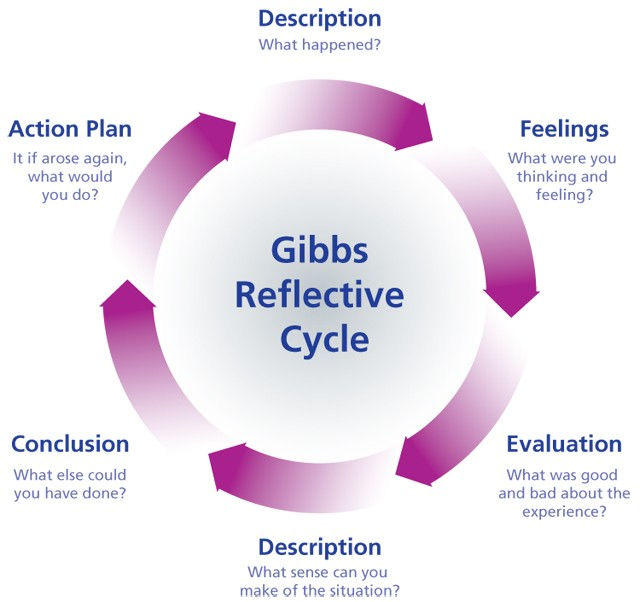
Personally, I have referred to the Gibbs model below during my early career and continue to use an adapted version still to this day.
Reflective Practice in Action
Often with reflective practice for sport scientists, we are reflecting in action.
By this I mean applying the process of reflection to a specific situation or experience.
An example of this may be that you have put on a coaching session with your athletes but things didn't go to plan. For some reason the session just didn't work, with your athletes showing a negative attitude and response to your coaching session.
By taking the above example, we can break down our reflections in a number of ways:
Self-awareness: Reflect on your thoughts, feelings, and intentions during the session. Consider your goals, expectations, and any challenges or concerns that arose.
Observation: Recall the details of the session. What activities did you plan? How did you deliver the content? How did the athletes respond? Take note of specific moments or interactions that stood out to you.
Analysis: Analyze the information you gathered during the session. Were there any specific strengths or weaknesses in your approach? Did all athletes seem engaged and understand the content? Did any athletes struggle or require additional support?
Evaluation: Evaluate the effectiveness of your coaching based on predetermined criteria or goals. Did you achieve your desired learning outcomes? Did the athletes grasp the key concepts? Did you effectively manage session dynamics and transitions?
Critical reflection: Engage in deeper thinking and questioning. What factors influenced the outcomes? Were there any assumptions or biases that may have affected your delivery? Were there alternative strategies or approaches you could have employed?
Learning and growth: Identify meaningful insights and lessons learned from the reflection process. Determine how you can apply these insights to improve future coaching practices. Consider seeking additional resources, attending professional development workshops, or collaborating with colleagues to enhance your skills and knowledge.
Reflective Practice Methods
When it comes to reflective practice methods, everyone is different.
Some like to keep daily journals of their activities for deep reflection. Other prefer a chat over coffee with a colleague.
Mentors can play a key role in reflective practice by providing an independent sounding board for your queries and concerns.
They are particularly useful when they have also had similar experiences and able to offer their expert advice on a situation.
However, most practitioners don't have formal mentors, so often reflect in silence or not at all.
This can limit the potential power of reflective practice and prevent the transition into a growth mindset.
Other common methods of reflective methods that might be useful for you include:
- Group discussions: such as team meetings or with your peers.
- Video recording: very useful when evaluating your practical delivery to athletes.
- Visualization exercises: Use visualization techniques to imagine alternative scenarios or outcomes, allowing you to reflect on different possibilities and approaches.
Take Home Messages
Reflective practice can be a powerful tool in the toolbox of practitioners, if used in the right way.
It doesn't mean you have to do daily journaling and meditate like some social media 'gurus' tell you to.
But being reflective on your own practice, whether you are an experience practitioner or new to the industry, can lead to personal and career growth.
My advice is choose a method that you are comfortable with and able to keep to consistently. Then seek out a mentor to use as a sounding board for your reflections.
Thank you for reading, see you next week.
Whenever you're ready, check out how I can help you further:
Football Fitness Mentorship Community: Are you a football fitness practitioner looking to accelerate your career? Join an exclusive online mentorship community of football fitness practitioners and access resources, educational content, 1:1 support and a worldwide network. The community is aimed at football fitness practitioners - whether you are a student with future aspirations to work in football, an early career practitioner still finding their way or experienced practitioners looking to progress their career further. Check it out here.